

Céad míle fáilte!
Welcome to Founder Focus, your semi‑regular deep dive into the journeys of Irish founders shaping industries in every corner of the globe.
This week, we’re heading to Tallaght! Alright, alright, calm down all you irish insights die hards who only come for the stories involving Irish founders operating abroad.
Firstly, as a proud Dublin Northsider, Tallaght basically felt like a foreign country to me growing up because it was so far south.
Secondly, our founder in question, Phil Kinsella, began his journey into entrepreneurship in Melbourne, Australia.
It’s also a really great story about an accidental entrepreneur. So let me away with this one!
Phil is the founder and CTO of H3D, who recently raised 4.9 million euro. The company was originally founded in 2018 and automates the design process for custom fit products in audiology and dentistry, taking 3D scan data and automating the design process to create a 3D printable file within a few minutes.
This is going to be a fascinating conversation...

⚡ Phil Kinsella - Fast Facts
💼 Company: H3D | 📊 Scale: 30 staff across Australia, Ireland, France, and Denmark |
🚀 What he does: automates the design process for custom fit products in audiology and dentistry, taking 3D scan data and automating the design process to create a 3D printable file within a few minutes. | 🌐 Prior Life: Received his bachelors in Mechanical Engineering from TUD, going into pursue a PhD in Swinbourne University in Melbourne |
🧑💻 LinkedIn: Phil Kinsella | 💸Funding: €4.9 million Series A led by Significant Ventures |
🌍 From: Tallaght, Dublin | 🧭 Expansion: From audiology into dentistry |

🌱 The Origin Story: A PhD in Entrepreneurship (sort of)
Phil, why did you decide to leave Ireland originally?
I’m from Tallaght and I studied Mechanical Engineering at what was the Institute of Technology in Tallaght. I got my bachelor's there and then graduated in 2012.
So with my partner at the time, the two of us decided to move to Australia just for something different. I think after studying for five years you want a bit of a change.
When I graduated there wasn't many jobs. That was one of the kind of key pushing factors for moving to Australia and it'd been a talking point among a lot of our friends in university, which I think put it in our minds.
If we had really thought about it, we might not have gone so far away…

Swinbourne University, Melbourne
After making the big move, when did you decide that you wanted to start a company and be an entrepreneur?
It was never really part of the plan. I had a few jobs but because of the visa situation, it is actually very difficult to get professional jobs in Australia.
Then just during the job hunt, I happened to see that there was a PhD ad in one of the job newsletters and it sounded really interesting so I applied for that PhD in Swinbourne University in Melbourne. I didn't get it but the supervisors liked my skillset that I had from the Mechanical Engineering degree. They put together a new PhD which was a crossover between engineering and design, which meant that I had two supervisors.
When I got the PhD scholarship, part of it was to develop 3D scanning equipment for the ear. During the initial review stage, we found that there was already a lot of 3D scanning equipment out there.
But we found that one of the main problems was actually how you take the scan data and make it into a functional product. So that became the PhD — how can you automate that design process.
Then towards the end of the PhD, we started to actually see the commercial side and how it could be used.
How did you shift your mindset from a researcher to an entrepreneur?
I think when I finished my degree in Ireland, I didn't really know what I wanted to do or what I could do with the degree.
When I went to Australia, it was very much just trying to find something that I could do that was interesting. During the PhD, I started to see a lot of the kind of entrepreneurship side of things. I was exposed to a lot of people that worked at the university that were very focused on patenting and commercialisation. They had worked with industry a lot.
I started to really cling on to that mindset from the people I was working with and then started to see that things could actually happen.
H3D was officially founded in 2018, right when I finished the PhD. My two supervisors lined up that initial seed funding through the university, who are still investors and invested in the latest round seven years later.
So It was really out of people around me that pushed to go for funding for the company. It was never, ‘do you think you could do this?’. It was just ‘let's do this’. So I went with the flow and luckily, it's all worked out!
It's very addictive. I can see why people just keep making new companies. It's something that I think a lot of people should try to experience working for themselves.
👀 Building H3D and the future
What has the process been like since finished up the PhD?
It's been up and down. At the start you really get thrown into the deep end and you have to learn a lot of the actual business side, especially as I was coming from research.
It was very slow at the start where we were trying to take the research level equipment and upgrade it to production level, which took a long time. It was only really when we started to get more people on board to help with the business side and actual company management when we started to actually see some progress. I could focus on the actual products themselves.
Once COVID happened, a lot of things shut down but we still maintained that steady growth. it also highlighted one of the needs for a system like ours when you don't have access to people and kind of those resources are limited, then you look towards automation.
What is the problem you are solving?
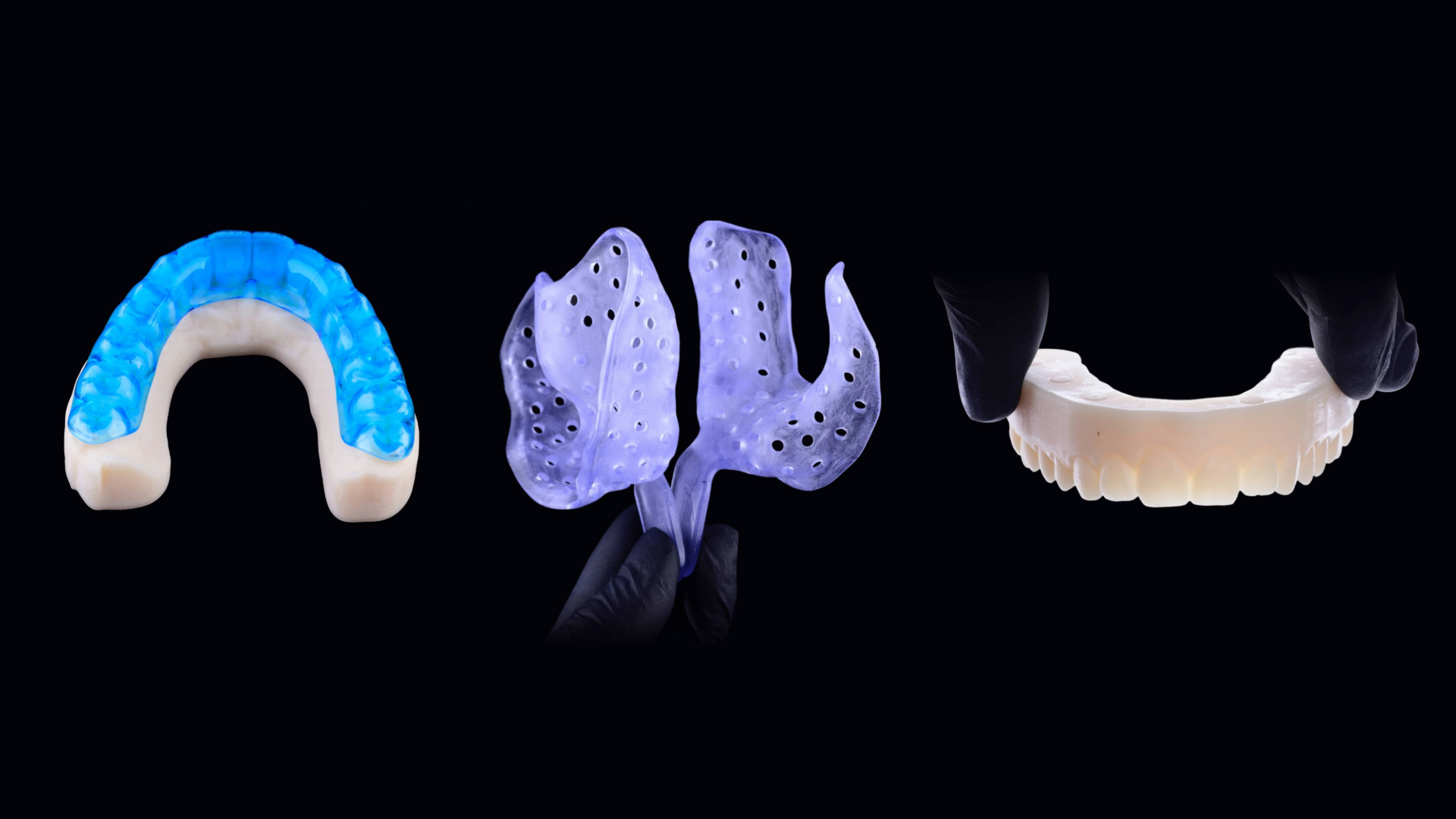
H3D is an automation company. So we automate the design process for custom fit products in audiology and dentistry. We take 3D scan data and we automate the design process to create a 3D printable file within a few minutes. That could be hearing aids, noise protection, music devices. In dentistry, you'd have things like splints, melt guards, and crowns. It solves the problem of having to manually design a lot of products, which would be a blocker for big companies that need to produce hundreds or thousands a day.
We work directly with labs and manufacturers. For example, manufacturers that make their own custom products, we will integrate into their systems and help remove that bottleneck in the actual design process. We also work with the labs that manufacture. So if you're getting hearing aids made and it goes to the lab, they can use our system.
But one of the bottlenecks is just the actual time it takes to go from getting scans to actually getting your product and the costs involved. We remove a lot of those bottlenecks and make it more accessible for people. So we have our own scanning app on the iPhone. We have our design process and we're working towards this kind of seamless end-to-end process of getting custom fit devices.
The demand is increasing, especially in the hearing aid industry. One of the reasons we started the company was to make the custom fit more accessible. I mean, if you could get a custom fit device very easily, I don't know a person that wouldn't want to.
What are you going to do with the money you recently raised?
The plans moving forward are really to keep building the team so that we can create more products within the systems and then to tightly integrate within the actual end-to-end process. So with the scanning equipment and the printers so that the labs don't have to press as many buttons. Then we can keep building the team and adding new verticals.
We're about 30 people at the moment. We're split across Australia, Denmark and Ireland and France. From when we started the company we were very remote based. It's in our blood really to work off Slack and Teams calls. It does have its complications not being able to just pull up a chair next to someone and work on something.
☘️ The Long Journey Home
Despite Australia turning you into the founder you are today, you came back home?
Yeah, we moved back to Ireland in 2022. It was just at the end of COVID when all the travel restrictions lifted. The decision was primarily just to be closer to family and we had two kids in Australia so we could use some help from the grandparents. We ended up living within five minutes of where I grew up in Tallaght, which is a bit jarring.
I’m working out of WorkIQ, an innovation and co-working space, in Tallaght as well. I had another office but then I saw WorkIQ. I think I emailed maybe a month after they had opened and I saw what they were trying to build there and I really liked it. I was on my own at that time so it was nice to have some people around that were kind of like-minded and have people that were actually out there trying to get some support.

WorkIQ Tallaght
So back in Tallaght, where it all began. Have you noticed any major changes in Ireland from an entrepreneurial stand point?
In Australia, they have an excellent culture in terms of working with industries and getting entrepreneurship very early in their education. I think even from your first year in university, they're highlighting startups and kind of what you can do with your research.
When I studied in Ireland I don't even think it was mentioned. But after coming back I can see where they're trying to change that.
Especially in Work IQ. They've already had universities in to show them what's going on and hosted different competitions for students. So I can see it growing.
It is great to see, especially in Tallaght.
Final Thoughts
I think we can all take a lot from Phil’s story:
You just never know what opportunities and ideas might pop up from the projects you get involved in
Going abroad and learning from ambitious people can truly broaden your perspective and give you the confidence to back yourself
You can always come home, whether that be Tallaght or Tubbercurry!
🔗 Share irish insights
{{rp_personalized_text}}

Copy and paste this link to others:
{{rp_refer_url}}
What'd you think of today's email?
Was this forwarded to you? Sign up here.